
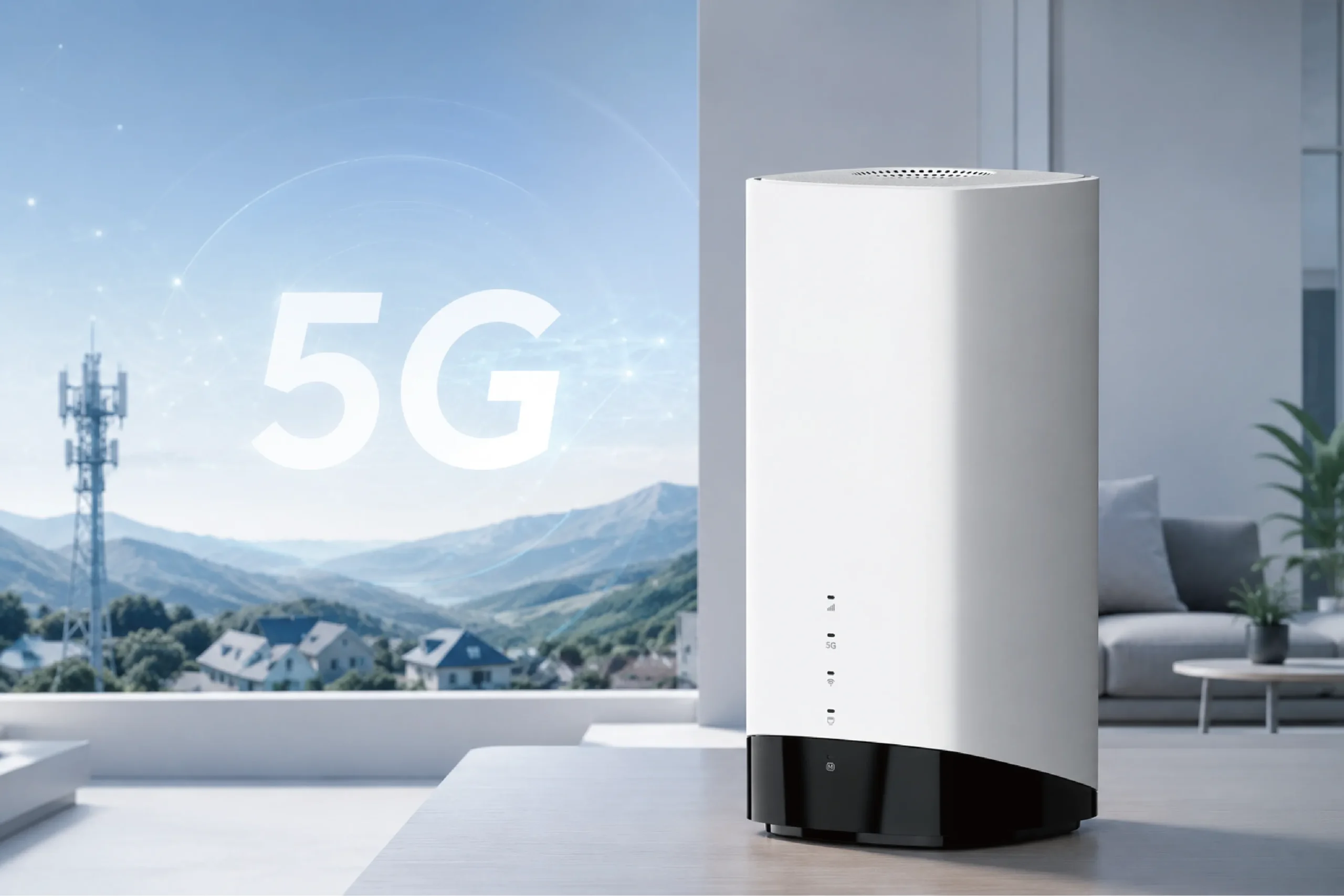
Why Telecom Operators Are Choosing 5G Fixed Wireless Access for Broadband Expansion
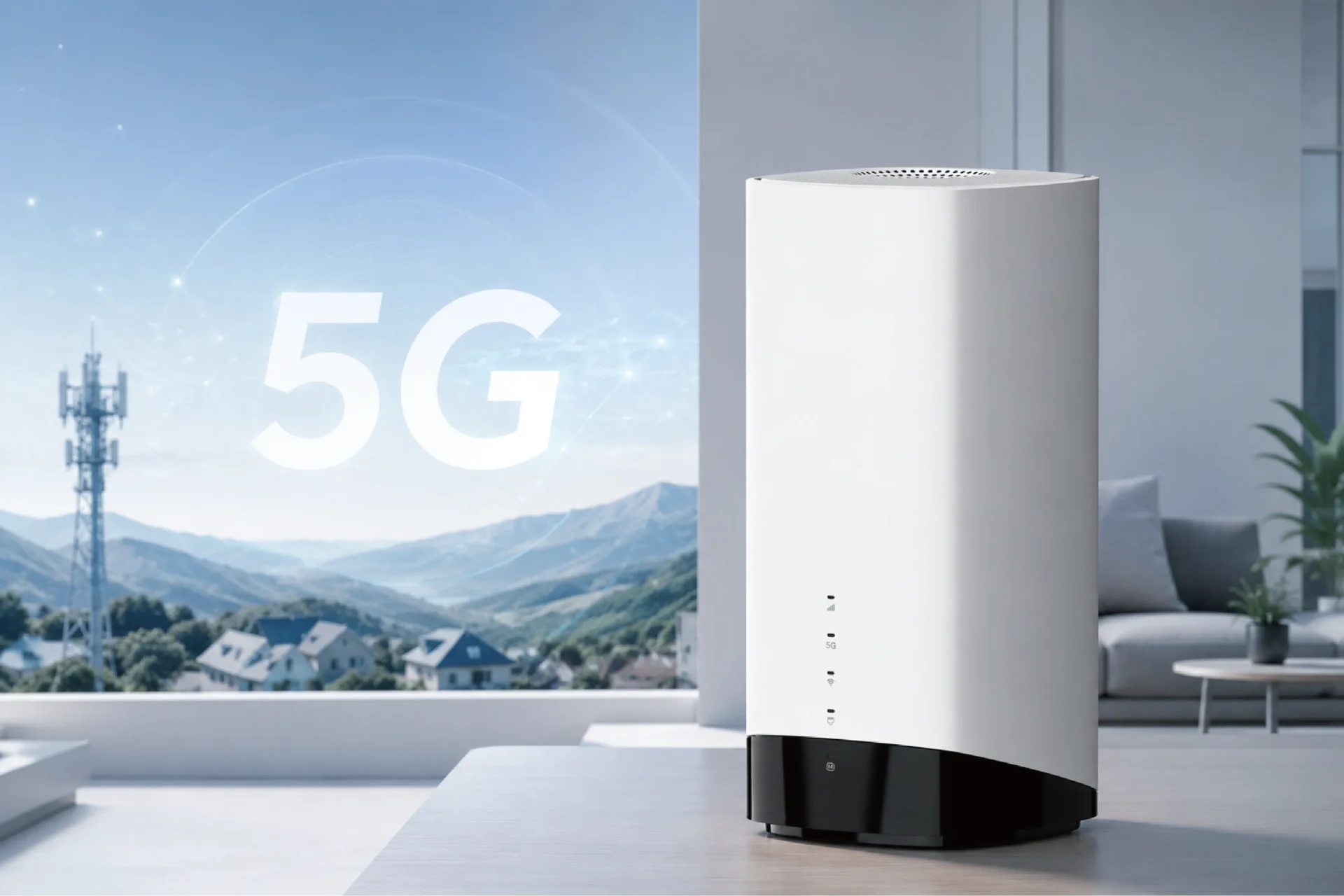
As global demand for high-speed broadband continues to rise, telecom operators are facing increasing pressure to expand network coverage, improve service quality, and optimize deployment costs.
While fiber-optic broadband remains the benchmark for speed and reliability, deploying fiber infrastructure is not always practical. In rural areas, suburban communities, and rapidly developing regions, fiber deployment can require significant investment, long construction periods, and complex infrastructure planning.
This is why 5G Fixed Wireless Access (FWA) is becoming an increasingly important broadband solution for telecom operators worldwide.
By leveraging existing 5G networks, FWA enables operators to deliver high-speed broadband services quickly and efficiently without extensive cable deployment. As a result, 5G FWA is becoming a key part of many operator’s broadband expansion strategies.
What Is 5G Fixed Wireless Access (FWA)?
5G Fixed wireless Access (FWA) is a broadband technology that uses 5G wireless networks to provide high-speed internet connectivity to homes, businesses, and other locations.
Unlike traditional fiber broadband, which requires physical cable installation, FWA delivers connectivity through a wireless link between a 5G base station and a customer-side device, typically a 5G Customer Premises Equipment (CPE).
A typical 5G FWA deployment includes:
- A 5G mobile network infrastructure
- Indoor or outdoor 5G CPE equipment
- Wi-Fi or Ethernet connectivity for end users
Modern 5G CPE devices support advanced features such as Wi-Fi 6, carrier aggregation, remote management, and flexible software customization, making them suitable for both residential and enterprise broadband applications.
Why More Telecom Operators Are Adopting 5G FWA
1. Faster Broadband Deployment
Expanding fiber networks often requires extensive construction work, including cable installation, road excavation, and infrastructure planning.
In comparison 5G CPE installed at the customer location, broadband services can be activated much faster, helping operators reduce deployment time and accelerate market expansion.
For regions where fast connectivity rollout is a priority, 5G FWA provides a flexible and efficient alternative.
2. Lower Infrastructure Costs
Fiber deployment requires significant capital investment in physical infrastructure, including underground cables, installation equipment, and long-term maintenance.
5G FWA reduces these challenges by using existing wireless networks to deliver broadband connectivity.
- Reduce capital expenditure (CAPEX)
- Lower deployment complexity
- Improve operational efficiency
- Increase return on existing network investments
By optimizing infrastructure costs, operators can expand broadband coverage while maintaining business sustainability.
3. Extending Broadband Coverage Beyond Fiber Networks
Although fiber provides excellent performance, extending fiber connectivity to every location is not always economically feasible.
Many regions still face connectivity challenges due to geographical limitations or high deployment costs, including:
- Rural communities
- Remote areas
- Industrial zones
- Newly developed residential areas
- Temporary deployment locations
- Temporary deployment locations
5G FWA provides a practical solution by bringing high-speed broadband access to locations where traditional wired networks are difficult to deploy.
4. Meeting Growing Broadband Demand
The demand for reliable broadband connectivity continues to increase as consumers and businesses rely on digital services every day.
Applications such as:
- Remote work
- Online education
- Cloud applications
- Video conferencing
- 4K streaming
- Smart home devices
- IoT connectivity
all require stable and high-performance internet access.
With advanced 5G CPE solutions, operators can provide scalable broadband services that meet the growing bandwidth requirements of modern users.
5. Maximizing the Value of Existing 5G Infrastructure
Telecom operators have invested heavily in building nationwide 5G networks.
5G FWA enables operators to maximize the value of these investments by using the same network infrastructure to support both mobile services and fixed broadband applications.
Benefits include:
- Improved network utilization
- Additional broadband revenue opportunities
- Better spectrum efficiency
- Faster broadband subscriber growth
This makes FWA an attractive business opportunity for operators looking to expand broadband services without building completely separate infrastructure.
5G FWA vs Fiber Broadband: Key Differences
Both fiber and 5G FWA play important roles in broadband connectivity. The right choice depends on deployment requirements, location, and business objectives.
|
Feature |
Fiber Broadband |
5G Fixed Wireless Access |
|
Deployment Speed |
Slower |
Faster |
|
Infrastructure Cost |
Higher |
Lower |
|
Installation Complexity |
High |
Lower |
|
Coverage Expansion |
Limited by physical infrastructure |
Highly flexible |
|
Rural Deployment |
More challenging |
More practical |
|
Scalability |
Moderate |
High |
Rather than replacing fiber, 5G FWA complements traditional broadband networks by extending connectivity to areas where wired deployment is difficult, expensive, or time-consuming.
Typical Applications of 5G Fixed Wireless Access
5G FWA can support various broadband deployment scenarios.
Residential Broadband
Operators can provide high-speed home internet services without waiting for fiber installation.
Enterprise Connectivity
Businesses can use 5G FWA for reliable connectivity in offices, retail stores, warehouses, and branch locations.
Rural Broadband Expansion
FWA helps connect underserved communities and improve digital inclusion.
Temporary Network Deployment
5G FWA is ideal for temporary offices, construction sites, events, and emergency communication scenarios.
Backup Connectivity
Businesses can deploy FWA as a backup broadband solution to improve network reliability.
What Makes an Operator-Grade 5G FWA Solution?
For telecom operators, successful FWA deployment requires more than just high-speed connectivity.
An operator-grade solution should provide:
- Reliable 5G performance
- Wi-Fi 6 or Wi-Fi 7 capability
- Remote device management
- TR-069 / TR-369 support
- FOTA firmware upgrades
- Secure network management
- Flexible customization options
- Long-term product reliability
These capabilities allow operators to efficiently manage large-scale deployments while maintaining consistent service quality.
How Wewins Supports Telecom Operators with 5G FWA Solutions
Wewins specializes in developing Mobile Broadband solutions for telecom operators, MVNOs, and enterprise customers worldwide.
Our product portfolio includes:
- Indoor 5G CPE
- Outdoor 5G CPE
- 4G LTE CPE
- Industrial wireless gateways
- Customized ODM/OEM solutions
Beyond hardware development, Wewins provides comprehensive customization capabilities, including:
- Remote device management solutions
- FOTA firmware upgrade systems
- eSIM integration
- Software customization
- Network optimization support
With extensive experience in wireless connectivity solutions, Wewins helps partners design scalable and reliable broadband products for different deployment environments.
Conclusion
As broadband demand continues to grow, telecom operators need solutions that balance performance, flexibility, deployment speed, and cost efficiency.
5G Fixed Wireless Access has become a practical approach for accelerating broadband expansion, extending network coverage, and maximizing existing 5G infrastructure investments.
Rather than replacing fiber, 5G FWA works alongside traditional broadband technologies to deliver reliable connectivity where wired deployment is challenging or uneconomical.
With expertise in 4G LTE, 5G CPE, and wireless broadband solutions, Wewins continues to support global partners in building scalable, reliable, and future-ready connectivity solutions.


 English
  Français
  العربية
  Español